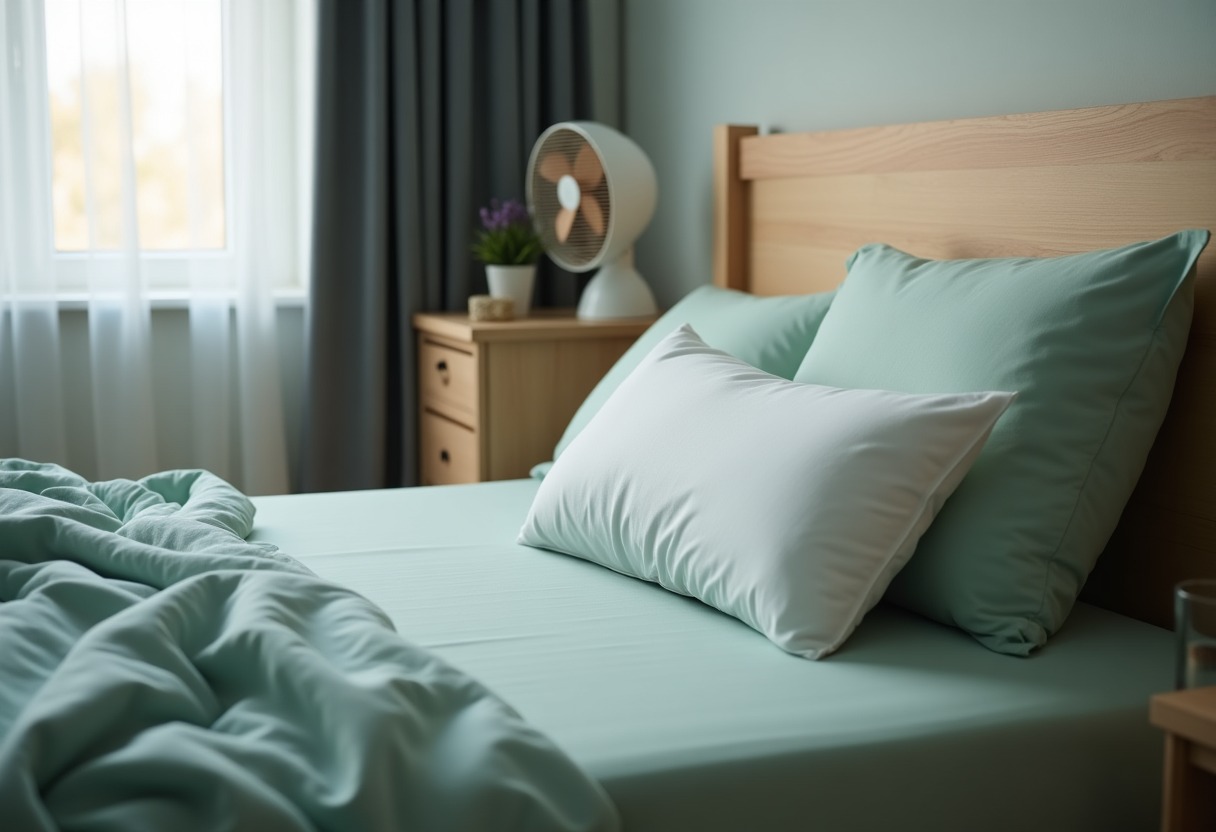
Hot flashes wake 75% of perimenopausal women at least three nights per week, transforming sleep from restoration into frustration. When your internal thermostat goes haywire between 2-4 AM, simple cooling strategies and targeted sleep adjustments can restore the deep rest your changing body desperately needs.
Why Perimenopause Wreaks Havoc on Your Sleep
Declining estrogen levels disrupt your body's natural cooling system and circadian rhythms. The North American Menopause Society confirms that vasomotor symptoms affect sleep quality in 80% of perimenopausal women, creating a cascade of sleep disruption that extends far beyond the hot flash itself.
Your core body temperature naturally drops 1-2 degrees before sleep onset. During perimenopause, sudden estrogen fluctuations trigger your hypothalamus to misread your body temperature, launching hot flashes that can raise your skin temperature by 7-8 degrees in minutes. This dramatic spike jolts you awake and keeps you there, often for 20-30 minutes while your system recalibrates.
The timing matters. Most perimenopause night sweats occur during lighter sleep phases, making it nearly impossible to transition back into restorative deep sleep. Women experiencing frequent hot flashes report 40% less REM sleep and 30% less deep sleep than their pre-perimenopausal counterparts.
Sleep Environment Modifications That Actually Work
Your bedroom becomes your first line of defense against nocturnal hot flashes. Temperature control requires precision — aim for 65-68°F, but prepare for rapid adjustments when hot flashes strike.
Layer your bedding strategically. Start with moisture-wicking sheets (bamboo or merino wool), add a lightweight blanket you can quickly remove, and keep a → Shop cooling mattress pad on Amazon underneath for consistent temperature regulation. Synthetic materials trap heat and moisture, amplifying the discomfort of night sweats.
Position a quiet fan to create gentle air circulation without direct drafts. The white noise masks partner movements that might wake you during vulnerable light sleep phases. → Shop bedroom fan on Amazon with multiple speed settings allows fine-tuning throughout the night.
Blackout your room completely. Light exposure during hot flashes can reset your circadian clock, making it harder to return to sleep. → Shop blackout curtains on Amazon combined with an eye mask creates optimal darkness.
Keep ice water and a small towel beside your bed. During a hot flash, placing the cold towel on your neck or wrists provides immediate cooling while you wait for your body temperature to normalize.
Cooling Strategies and Sleep Timing
| Strategy | Implementation | Effectiveness | Duration | |----------|----------------|---------------|----------| | Pre-sleep cooling | Cold shower 1 hour before bed | High - lowers core temperature | 2-3 hours | | Cooling pajamas | → Shop bamboo pajamas on Amazon | Moderate - reduces severity | All night | | Frozen pillowcase | Keep 2-3 pillowcases in freezer | High - immediate relief | 15-20 minutes | | Cooling pillow | Memory foam with gel layer | Moderate-High - consistent cooling | All night |
Natural Supplements That Support Cooler Sleep
Several evidence-backed supplements can reduce hot flash frequency and improve sleep quality. Magnesium perimenopause supplementation shows particular promise, with glycinate forms providing both muscle relaxation and temperature regulation benefits.
Black cohosh demonstrates modest but consistent effects on vasomotor symptoms. The Black cohosh perimenopause does it work research suggests 40mg daily may reduce hot flash frequency by 20-30% within 4-6 weeks.
Ashwagandha perimenopause benefits include both stress reduction and mild cooling effects. Take 300-500mg two hours before bedtime to support calmer sleep transitions. Avoid taking it too late, as some women experience mild alertness initially.
Consider a comprehensive approach with a Best supplements perimenopause starter kit that addresses multiple sleep disruptors simultaneously. Omega 3 perimenopause supplementation may reduce inflammation that contributes to temperature dysregulation.
→ Shop cooling pillow on Amazon with copper-infused or gel-layer designs maintain cooler head temperatures throughout the night.
Advanced Sleep Hygiene for Hot Flash Management
Most sleep advice misses the perimenopause-specific timing considerations. Your pre-sleep routine needs to begin 90 minutes before intended bedtime, not the typical 30 minutes. This extended window allows for gradual temperature reduction and accounts for potential hot flash delays.
Avoid alcohol within 4 hours of sleep. While it might help you fall asleep initially, alcohol disrupts temperature regulation and increases hot flash likelihood during the second half of the night. The rebound effect often triggers hot flashes between 2-4 AM when your liver processes the alcohol.
Time your last meal 3 hours before bed, focusing on lighter proteins and avoiding spicy foods, caffeine, and large portions. Digestion generates internal heat that can trigger temperature sensitivity in already-primed systems.
Create cooling rituals that signal sleep readiness. Essential oils like best essential oils for sleep — particularly peppermint and eucalyptus — provide cooling sensations while activating relaxation responses. Apply diluted oils to pulse points 30 minutes before bed.
Practice progressive muscle relaxation starting from your feet. Tension generates heat, and conscious muscle release can lower your overall body temperature by 1-2 degrees. Focus especially on releasing jaw, shoulder, and neck tension where heat accumulates.
FAQ
How long do perimenopause sleep problems typically last? Perimenopause sleep disruptions usually persist for 4-8 years, with the most intense period occurring in the 2-3 years before menopause. How long does perimenopause last varies significantly between women, but sleep improvements often begin within 1-2 years after your final menstrual period. The key is implementing consistent sleep strategies early rather than waiting for symptoms to resolve naturally, as this can preserve better sleep patterns long-term.
Can I take melatonin if I'm having hot flashes? Melatonin can be helpful for perimenopause insomnia, but timing matters with hot flashes. Take 0.5-1mg about 3 hours before desired sleep time rather than right before bed, as hot flashes can interfere with melatonin's temperature-lowering effects. Some women find that melatonin actually helps reduce hot flash frequency when taken consistently, though the evidence is mixed. Start with the lowest effective dose and avoid extended-release formulations that might keep you groggy if hot flashes wake you.
Should I get up during a hot flash or stay in bed? Stay in bed if possible, but make yourself comfortable with cooling measures. Getting up fully activates your nervous system and makes it harder to return to sleep after the hot flash subsides. Instead, remove covers, use your bedside cooling towel, sip ice water, and practice slow breathing. Only get up if you need to change completely soaked nightclothes or if staying in bed increases your anxiety about sleep. Most hot flashes peak within 3-4 minutes and resolve within 10 minutes.
Why do my hot flashes seem worse when I'm stressed about not sleeping? Stress and sleep anxiety create a vicious cycle with hot flashes. Cortisol elevation from worry amplifies your body's temperature sensitivity, making hot flashes more frequent and intense. Additionally, stress breathing (shallow, rapid) can trigger hot flashes independently of hormonal fluctuations. Perimenopause anxiety attacks often coincide with sleep disruption, creating compound effects. Practice accepting that some nights will be disrupted rather than fighting the experience, which paradoxically improves both sleep quality and hot flash intensity.
Do cooling mattress pads really help with night sweats? Quality cooling mattress pads can reduce night sweat severity by maintaining consistent skin temperature, but they won't prevent hot flashes entirely. Look for active cooling systems with water circulation or phase-change materials rather than passive gel layers that warm up quickly. Expect 20-30% improvement in comfort during hot flashes rather than complete elimination. The benefit extends beyond the hot flash itself — maintaining cooler skin temperature helps you fall back asleep faster and reduces the anxiety associated with overheating during sleep.
The right combination of environmental cooling, strategic supplementation, and adapted sleep hygiene transforms perimenopause sleep challenges from nightly battles into manageable adjustments that honor your body's changing needs.
Some links on this page are affiliate links. We may earn a small commission if you purchase through them, at no extra cost to you.
As an Amazon Associate we earn from qualifying purchases. This article contains affiliate links; if you buy through them we may earn a small commission at no additional cost to you.